


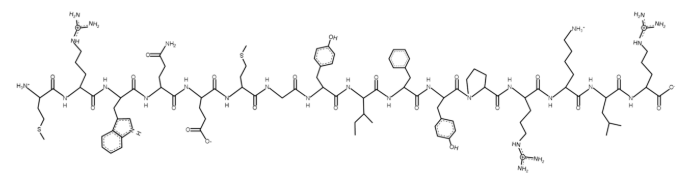
MOTS-c Structure, De BQUB17-JHolguera – Trabajo propio, CC BY-SA 4.0
Source: Wikipedia
Sequence: Met-Arg-Trp-Gln-Glu-Met-Gly-Tyr-Ile-Phe-Tyr-Pro-Arg-Lys-Leu-Arg
Molecular Formula: C101H152N28O22S2
Molecular Weight: 2174.64 g/mol
PubChem SID: 255386757
CAS Number: 1627580-64-6
Reported Synonyms: Mitochondrial open reading frame of the 12S rRNA-c, MT-RNR1
MOTS-c is a 16–amino acid peptide whose primary structure and molecular composition have been characterized in biochemical research sources. Structural descriptions are limited to physicochemical attributes and reported sequence information derived from non-clinical research references.
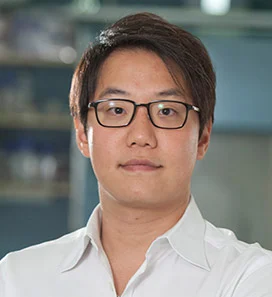
Dr. Changhan David Lee, contributor to “MOTS-c: A novel mitochondrial-derived peptide regulating muscle and fat metabolism,” and “The Mitochondrial-Encoded Peptide MOTS-c Translocates to the Nucleus to Regulate Nuclear Gene Expression in Response to Metabolic Stress,” is a researcher at the School of Gerontology at USC Leonard Davis.
Pinchas Cohen, MD, is the dean of the USC Leonard Davis School of Gerontology, executive director of the Ethel Percy Andrus Gerontology Center, and holder of the William and Sylvia Kugel Dean’s Chair in Gerontology. He is an expert in the study of mitochondrial peptides and their possible therapeutic benefits for diabetes, Alzheimer’s, and other diseases related to aging. Cohen’s current research focus is on the emerging science of mitochondria-derived peptides, which he discovered. These peptides include humanin, a 24-amino acid peptide encoded from the mt-16S-rRNA. It is a novel, centrally acting insulin sensitizer and metaboloprotective factor representing a new therapeutic and diagnostic target in diabetes and related disease. Other mitochondrial peptides of interest include MOTS-c, a second peptide encoded from a small ORF in the 12S region of the mitochondrial chromosome that has potent anti-diabetes and anti-obesity effect and acts as an exercise-mimetic, and SHLP2, a peptide encoded from the light strand of the mt-16S-rRNA region whose levels correlate with prostate cancer.
Dr. Changhan David Lee and Dr. Pinchas Cohen are being referenced as leading scientists involved in the research and development of Humanin. In no way are these doctors/scientists endorsing or advocating the purchase, sale, or use of this product for any reason. There is no affiliation or relationship, implied or otherwise, between Peptide Sciences and these doctors. The purpose of citing the doctors is to acknowledge, recognize, and credit the exhaustive research and development efforts conducted by the scientists studying this peptide. Dr. Changhan David Lee is listed in [1] [3] Dr. Pinchas Cohen is listed in [9] under the referenced citations.
